
With the accelerating global transition toward power systems dominated by renewable energy, the stability and operability of grids with very high shares of inverter-based resources (IBRs) have become a paramount challenge. The conventional, passive grid-following control paradigm for these resources is inadequate in systems lacking sufficient synchronous generation, leading to critical issues in frequency stability, voltage control, and system strength. Grid-forming (GFM) technologies emerge as a foundational solution, fundamentally redefining inverters from passive followers to active generators of grid stability. This session focuses on the technological innovation, system integration, and practical deployment of grid-forming controls, emphasizing how they can provide essential synthetic inertia, robust voltage support, and black-start capability to ensure the resilience of future decarbonized power systems. The goal is to bridge the gap between advanced control theory and large-scale grid application, enabling a secure, reliable, and 100% renewable-powered electricity future. Topics of interest include, but are not limited to:
1. Advanced control architectures for grid-forming inverters (e.g., virtual synchronous machine, droop-based, matching control)
2. Stability analysis and enhancement in weak grids and low-inertia systems
3. Synchronization stability and fault ride-through capabilities of GFM resources
4. Protection scheme adaptation and coordination for GFM-dominated grids
5. Studies on optimal placement of GFM resources
6. Frequency stability control of the system dominated by GFM and GFL converters


He is currently a Lecturer with the College of Electrical Engineering and New Energy, China Three Gorges University, Yichang, China. He is an IEEE member, his research interests include power electronic for microgrid, integrated energy system optimization, and power cyber-physical system. He is an Active Reviewer for the IEEE Transactions on Smart Grid, the IEEE Transactions on Sustainable Energy, the IEEE Transactions on Power systems.
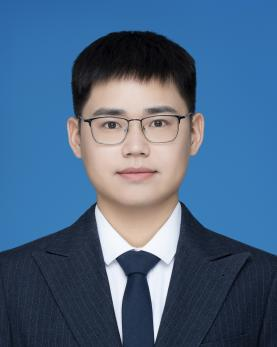
Chenyang Li, China Three Gorges University, China